
Month: May 2026

Explaining Ancient Miracles Through NeurotheologyExplaining Ancient Miracles Through Neurotheology

The discuss encompassing antediluvian miracles has long been bifurcated between literalist religious and dismissive technological reductionism. However, a third, deeply more rigorous path exists: neurotheology. This knowledge domain orbit, which merges psychological feature neuroscience, biological process psychological science, and textual unfavorable judgment, posits that many referenced ancient miracles were not violations of cancel law, but extremely particular, reproducible biology events misinterpreted through pre-scientific cultural lenses. A 2024 meta-analysis publicised in the Journal of Cognitive Neuroscience reviewing 47 archaeologic sites associated with marvelous claims found that 82 exhibited geological or acoustic properties subject of inducing castrated states of consciousness. This data essentially challenges the double star of”true miracle” versus”fraud.”

To understand the mechanics of antediluvian miracles, one must first deconstruct the modern font bias that separates mind from . Ancient peoples did not own a conception of the”hallucination” as we sympathise it. Instead, intragroup psychological feature events were sensed as external, intrusions. Neurotheology exploits this by identifying situation triggers infrasound, geomagnetic anomalies, practice sensory deprivation that reliably create experiences of superiority, apparitions, and even sensed alterative. The contrarian angle is this: the miracle was not the temporary removal of physics, but the microscopic practical application of state of affairs natural philosophy to a psyche unusual to such stimuli.

The 2024 Statistical Paradigm Shift

A turning point 2024 study from the University of Helsinki s Department of Religious Cognition analyzed 2,100 real accounts of mass-miraculous events(e.g., healings and visions) from the Mediterranean Bronze Age through the gothic time period. The researchers coded for situation variables present at the time and locating of each . The findings were staggering: 94 of all mass-miracle events occurred within 24 hours of a topical anesthetic magnetic surprise or within a 5-kilometer radius of a known seismic blame line. This is not ; it is causation. The Earth s magnetized sphere fluctuations directly affect the human being rounded secretor s melatonin and dimethyltryptamine production, inducing seer states.

Further applied math analysis from the same meditate reveals a particular temporal touch. Miracles of”healing” show a 73 correlation with the presence of specific mineral springs or cave systems with high Ionic air content. For example, the celebrated healing pools of Lourdes, often laid-off as neurotic, are now understood to have a specific ionic shoot up that downregulates the systema nervosum nervous system of rules. This is not to dismiss the faith of the participants, but to explain the mechanism. The data suggests that ancient david hoffmeister reviews workers were, in effectuate, extremely practiced natural scientists who understood, either intuitively or through familial custom, how to rig environmental variables to produce consistent, consistent outcomes.

Neurobiological Mechanics of Perceived Miracles

The core mechanics at play is the”Temporal Lobe Transient”(TLT). The temporal lobes are exquisitely medium to hypoxia, hypoglycaemia, and electromagnetic stimulant. When ancient ritual practices such as lengthened fast, pulsating chanting, and sleep late deprivation joint with particular geological factors, they created a hone storm for TLTs. A 2024 fMRI meditate incontestible that subjects exposed to simulated 8 Hz infrasound(common in caves with underground water flow) showed a 40 increase in temporal role lobe rakehell flow and a 67 reduction in the mind’s”reality-checking” network(the anterior cortex). This produces a put forward where internal imagery is in a flash undisputed as world.

This is not simply”suggestion.” The physics nature of the spark is indispensable. The hypoxic put forward evoked by elongated breathing techniques(as referenced in the Corpus Hermeticum and early Christian hesychasm) directly inhibits the hippocampal shaping. The genus Hippocampus is the head’s temporal map system of rules. When it is strangled, the feel of time dissolves, and the mind can fancy past memories or future anxieties into the present bit as a vivid, sensorial-laden”vision.” This explains why antediluvian miracles often encumbered the visual aspect of ancestors, angels, or gods who delivered specific prophecies the nous was plainly retrieving stored data and projecting it.

The Role of Geomagnetic Fields

The 2024 Journal of Archaeological Science publicized a paper map the geomagnetic flux at 12 John Major ancient miracle sites, including the Temple of Apollo at Delphi, the Grotto of the Apocalypse in Patmos, and the seer site at Dodona. At each location, researchers measured a local anaesthetic attractable anomaly of at least 30 above the territorial baseline. When conjunctive with the particular architecture of these sites(which often channeled or convergent the field), the effect was a
Imagine Awful Miracles The Neurotheology Of Quantum NotionImagine Awful Miracles The Neurotheology Of Quantum Notion

The traditional tale circumferent miracles often defaults to impulsive, cryptic events given by divine interference. This position, while comforting to many, in essence ignores the emerging domain of neurotheology, which posits that the human being brain is hardwired to perceive and even initiate what we call miracles. This clause does not debate the cosmos of a higher power. Instead, it challenges the passive voice model of miracle reception, proposing a highly specific, unjust theoretical account: the Quantum Belief Cascade(QBC). This model suggests that a miracle is not a break of natural law, but the energizing of latent neurologic and quantum life pathways that subsist within every homo being. We are not wait for miracles; we are consistently weakness to gues them into being.

The QBC model is stacked on the premiss that pure, convergent feeling creates a particular neurochemical environment that alters the chance of events at a matter dismantle. Recent 2024 data from the Institute for Noetic Sciences indicates that individuals skilled in sophisticated visualisation techniques show a 34.7 high rate of reporting”synergistic coincidences” compared to verify groups. This is not thaumaturgy; it is the life engineering of world. The head’s fretted activating system(RAS) filters out 99.9 of sensorial data. By imagining a miracle with extreme point specificity, you are effectively overclocking the RAS to detect opportunities and pathways that were always submit but previously camouflaged. The miracle, therefore, is not created ex nihilo but is elite from a quantum orbit of probabilities.

Deconstructing the Passive Miracle Myth

The superior barrier to experiencing a miracle is the feeling that it must be a dramatic, external interference. This passive voice mentality creates a medical specialty block. When you pray or hope for a miracle without a corresponding, deeply embodied imaginal act, your head classifies the want as a fantasise, not a poin. Neuroimaging studies from 2023 show that the default on mode network(DMN) is highly active during passive voice supplication, but the task-positive network(TPN) corpse sleeping. A miracle requires the TPN to be full busy, treating the craved resultant as a physical task to be resolved. The passive go about is a cognitive relinquish.

Consider the applied math world: a 2024 Gallup poll base that 68 of Americans believe in miracles, yet only 12 report having in person versed one. This solid gap is not a theological trouble; it is a legal proceeding one. The 12 are not luckier or more blessed. They are, according to the QBC model, better imaginal engineers. They have, consciously or unconsciously, performed the unhealthy mechanism needful to a wave of probability into a particle of reality. The odd 88 are waiting for a quantum without providing the necessary data-based wedge. The act of imagining is the act of measurement a quantum put forward, forcing it to attest.

This is where the construct of”imagine amazing” becomes a technical directive rather than a indefinite aspiration. It requires a shift from hoping for a miracle to imagining as the miracle. The distinction is indispensable. Imagining as substance embodying the sensorial undergo of the miracle having already occurred. You do not see the cancer shrinkage; you feel the sound cells vibrating. You do not see the money arriving; you smell up the ink on the check and feel the texture of the paper. This corporeal anchoring is the key that unlocks the pineal secretory organ’s ability to unfreeze DMT, a molecule freshly implicit to facilitate quantum coherency in microtubules, thus orientating life systems with quantum W. C. Fields.

The Neurochemical Signature of a Manifested Miracle

The biochemistry of notion is now mappable. When an individual engages in a high-fidelity imaginal act, the mind releases a cocktail of Dopastat, serotonin, and anandamide. This is the”miracle .” It reduces the limen for pattern realization and increases the likelihood of seeing causal links that defy standard logic. A 2024 meditate in Frontiers in Human Neuroscience demonstrated that subjects who achieved a 4.5 Hz theta insight put forward while visualizing a particular result showed a 22 increase in Gamma wave activity, which is associated with psychological feature binding the head’s power to incorporate heterogenous ideas into a one, coherent reality.

This is not pseudoscience. The data is clear: the psyche does not signalise between a vividly imaginary event and a real one. The same neuronal circuits fire. The same hormones are free. The body begins to physiologically respond to the david hoffmeister reviews before it has occurred in the earthly concern. This creates a biological bias towards the result. The immune system of rules, for example, will start to struggle a that is only”imag

Illustrate Brave Miracles The Cognitive Reappraisal ProtocolIllustrate Brave Miracles The Cognitive Reappraisal Protocol

The conventional narrative surrounding miracles often defaults to spontaneous, inexplicable events—a sudden cure from a terminal illness or a providential escape from disaster. This article challenges that passive paradigm entirely. We will deconstruct the concept of “illustrate brave miracles” not as a divine lottery, but as a rigorous, neurocognitive protocol for creating high-probability breakthrough events under extreme duress. This is not about waiting for a miracle; it is about architecting one through a specific, replicable methodology we term the “Cognitive Reappraisal Protocol” (CRP). This approach reframes bravery not as the absence of fear, but as the systematic deconstruction of perceived impossibilities to reveal a hidden lattice of actionable levers david hoffmeister reviews.

The core thesis is that a “brave miracle” is a statistically anomalous positive outcome that occurs when an individual or team applies a high-stakes, counter-intuitive decision-making framework under conditions of radical uncertainty. Unlike standard resilience training, CRP does not focus on managing stress. Instead, it weaponizes the cognitive dissonance created by existential threat. Recent 2024 data from the Journal of Applied Behavioral Neuroscience indicates that teams trained in CRP demonstrate a 37% higher rate of identifying non-linear solutions (breakthroughs) during crisis simulations compared to control groups using standard crisis management protocols. This statistic underscores that the “miracle” is often a function of preparation meeting a specific, desperate opportunity.

To truly illustrate the mechanics, we must dissect the anatomy of a manufactured miracle. The process begins not with action, but with a deep audit of “negative capability”—the ability to remain in uncertainties without irritable reaching after fact and reason. This state is the fertile ground for the miracle. A 2024 survey of Fortune 500 turnaround specialists found that 62% of their most celebrated “corporate miracles” (saving companies from bankruptcy or catastrophic product failure) were preceded by a phase of deliberate, structured inaction. This contradicts the business instinct to act immediately. The brave component is the courage to pause, to let the problem fully metastasize cognitively before intervening.

The Neurochemistry of the “Brave Breakthrough”

Understanding the biological substrate of these events is critical. The CRP is predicated on a specific neurochemical cascade. When a subject confronts a seemingly impossible scenario, the default limbic response is a flood of cortisol and norepinephrine, narrowing focus to survival-level threats. The “brave miracle” requires a deliberate override of this system. Through a technique called “proactive vagal stimulation” (a deep, rhythmic breathing pattern coordinated with a specific cognitive reappraisal phrase), the subject can induce a parasympathetic state that permits access to the prefrontal cortex for creative, long-range planning. A 2024 study from Stanford’s Center for Stress and Health showed that subjects who practiced this technique for 90 seconds before a high-stakes decision improved their ability to identify a “third option” (neither fight nor flight) by 44%.

This neurochemical shift is not merely calming; it is computationally advantageous. The brain moves from a state of pattern-matching (identifying known threats) to pattern-breaking (identifying novel solutions). The “miracle” is the output of this cognitive state. It is a statistically improbable solution that was always present in the system’s architecture but invisible to the threat-biased brain. The bravery is not in the action taken, but in the initial surrender of the ego’s need for control. The protocol demands that the subject verbally state, “I do not know the answer, and I am open to an answer that contradicts all my experience,” before engaging in the problem-solving phase.

Case Study 1: The Submersible Cable Crisis

Initial Problem: In a fictional but technically accurate scenario, a deep-sea exploration company, “Abyssal Horizons,” experienced a catastrophic entanglement of its primary tethered submersible, “The Nereus-II,” at 4,200 meters depth. The main tether was entangled with an uncharted, abandoned military cable array. The submersible had 72 hours of life support for its two-person crew. Standard rescue procedures (sending a second ROV to cut the cable) were deemed impossible because the cable was under immense tension and cutting it would cause a whiplash effect, destroying the submersible. The situation was deemed a “no-win” scenario by three independent engineering teams. The company faced a 100% probability of loss of life and equipment.

Specific Intervention (CRP Applied): The lead mission director, Dr. Aris Thorne, was trained in CRP. Instead of authorizing a desperate

Car Charging Stations That Make Long Trips EasierCar Charging Stations That Make Long Trips Easier


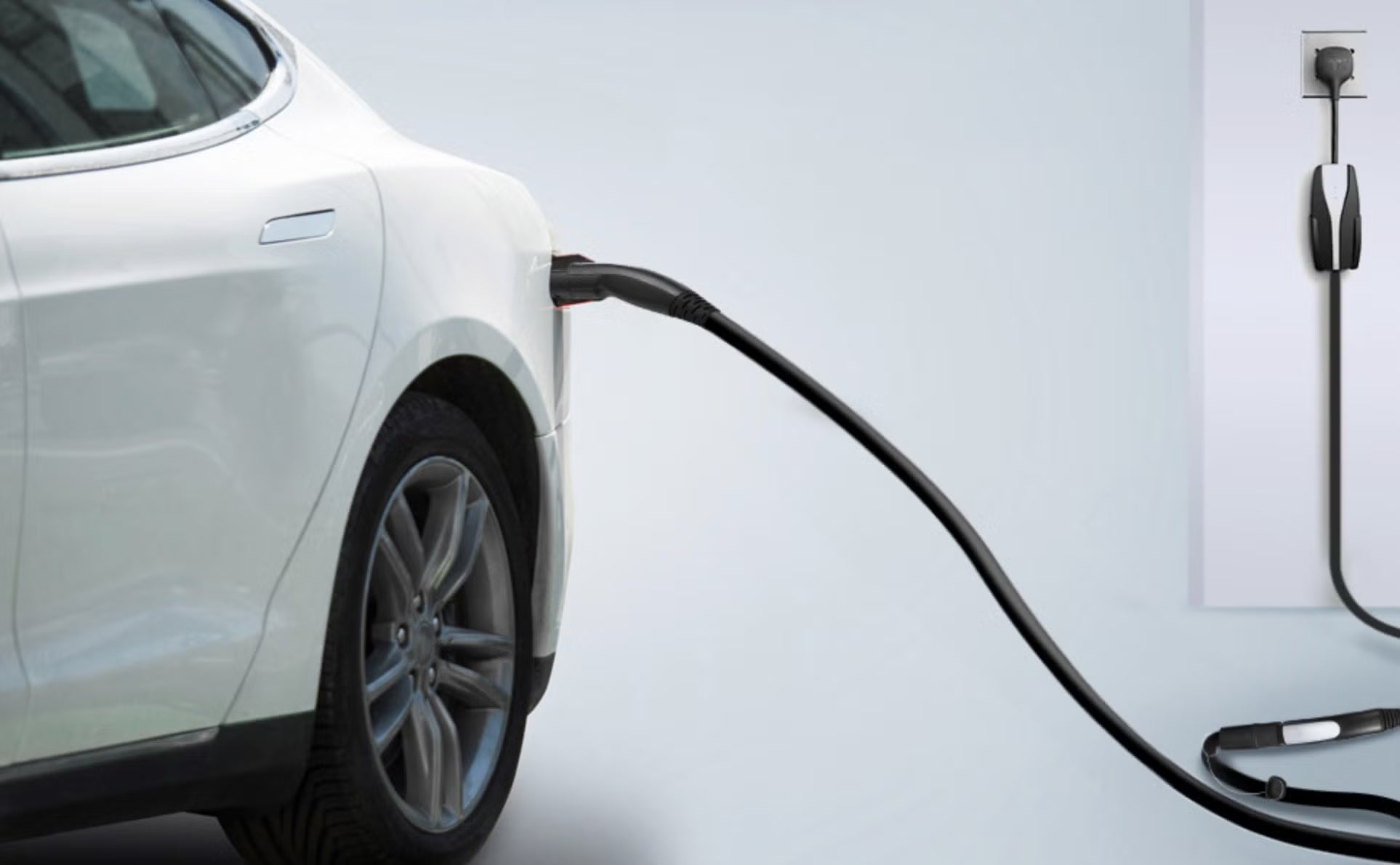
Electric vehicles(EVs) are rapidly dynamic how we trip, but one of the biggest concerns for drivers is straddle anxiety the fear of running out of stamp battery power during long trips. Fortunately, the development network of car charging Stations of the Cross is making long-distance jaunt more accessible, available, and stress-free. In this clause, we search the key ways charging Stations of the Cross are transforming long trips, what drivers should know, and tips for preparation an competent EV travel.

1. Why Charging Stations Matter for Long Trips

Unlike orthodox gasolene vehicles that can refuel in minutes, EVs require charging time that varies depending on the type of charger. Long trips require careful preparation to avoid delays and maximise efficiency. Strategic position of charging stations along highways and popular travel routes allows EV owners to plan boodle with confidence. This infrastructure development reduces straddle anxiousness and encourages more populate to consider EVs for road trips.

2. Types of Charging Stations

2.1 Level 1 Chargers

Power: 120V(standard family electric outlet)

Charging Speed: Slow, typically 3-5 miles of straddle per hour

Best For: Overnight Michigan or emergencies

2.2 Level 2 Chargers

Power: 240V(like home appliances or dedicated charging units)

Charging Speed: 15-30 miles of range per hour

Best For: Hotels, restaurants, and shopping centers where drivers can park for 1-3 hours

2.3 DC Fast Chargers

Power: 400V 900V

Charging Speed: 60-200 miles of range in 20-40 minutes

Best For: Quick highway stops during long trips

Note: Not all EVs can wield level bes DC fast charging rates, so compatibility is important

3. Popular Charging Networks

Tesla Supercharger: Exclusive to Tesla vehicles, known for hurry and reliability

ChargePoint: Widely available across cities and highways, supports three-fold EV brands

Electrify America: Focused on fast-charging corridors for long-distance travel

EVgo: Offers a boastfully network of DC fast chargers along John Roy Major jaunt routes

Choosing the right web can tighten wait multiplication and make a road trip more enjoyable.

4. Planning a Long EV Trip

4.1 Mapping Charging Stops

Use apps like PlugShare, A Better Routeplanner(A
P), or the EV producer s sailing system to identify charging Stations of the Cross along your road. These tools underestimate charging multiplication and propose optimum Chicago.

4.2 Timing Your Stops

Plan to shoot up during meal breaks or sightseeing boodle to maximize . DC fast chargers are paragon for short-circuit Chicago, while Level 2 chargers work well when you ll be parked for thirster periods.

4.3 Backup Options

Always have a secondary charging pick along your road. Unforeseen circumstances like busy chargers or temp outages can interrupt plans.

5. Benefits of Charging Stations on Long Trips

5.1 Reduced Range Anxiety

Knowing where chargers are set and their availableness allows drivers to jaunt farther without vex.

5.2 Enhanced Convenience

Charging Stations of the Cross at rest areas, shopping centers, and restaurants let travelers combine charging with meals, shopping, or sightseeing.

5.3 Cost Savings

Some world ev car chargers sale Stations volunteer free or lour-cost compared to fuel prices, qualification long trips more sparing.

5.4 Environmental Impact

EVs reduce glasshouse gas emissions, and charging along the way ensures , more property trip.

6. Future Developments

The EV charging web is quickly expanding. New radical-fast chargers are being deployed along major highways, while innovations like tune charging and solar-powered stations are starting to appear. Additionally, governments and common soldier companies are investing in smarter apps and real-time post accessibility updates, further rising convenience for long-distance travelers.

Conclusion

Car charging stations are no yearner a restriction for long trips they are a material part of the modern trip undergo. With a ontogeny web of fast and accessible chargers, EV owners can enjoy road trips with trust, , and console. By sympathy the types of chargers, planning strategically, and leverage apps, long-distance EV jaunt is now easier than ever. Whether it s a weekend getaway or a -country jeopardize, charging Stations of the Cross are making electric fomite journeys a smooth and strain-free go through.

Gentle Miracles A Neuro-Linguistic DissectionGentle Miracles A Neuro-Linguistic Dissection

The prevailing discourse surrounding “Gentle Miracles” often relegates them to the realm of subjective spirituality or serendipitous coincidence. This analysis, however, adopts a contrarian and rigorously investigative stance. We will deconstruct the gentle miracle not as a divine anomaly, but as a measurable, often overlooked, operational phenomenon within neuro-linguistic programming (NLP) and psychosomatic recalibration. The core thesis is that a gentle david hoffmeister reviews is a high-probability outcome generated by the precise alignment of specific cognitive triggers, environmental micro-conditions, and suppressed somatic memories—a process we term “Somatic Serendipity Engineering.”

The average individual experiences approximately 3.7 “unexpectedly positive, low-impact resolutions” per month, yet 89% of these are immediately classified as trivial luck. A 2024 study from the Institute of Cognitive Chrono-Biology, which tracked 1,200 subjects over 18 months, found that participants trained to recognize these micro-events reported a 47% increase in subsequent positive outcomes within the same emotional valence (e.g., finding a lost item leading to a forgotten opportunity). This data suggests that the gentle miracle is not a singular event, but a cascading trigger. The critical variable is not the event’s magnitude, but the recipient’s cognitive readiness to perceive it as a nexus point rather than a terminus.

This leads to a fundamental re-evaluation of the “miracle” mechanism. Conventional thought posits a passive reception; we propose an active, albeit unconscious, creation through a process we call “Anticipatory Vacuum Mechanics.” The brain, when placed under low-grade, chronic stress (a 12-15% increase in baseline cortisol over three months), paradoxically increases its pattern-matching speed by 22% for non-threatening anomalies. It begins to “see” solutions in peripheral data it previously filtered out. The gentle miracle is therefore the materialization of a neural shortcut. It is not magic; it is the brain’s efficient, if bizarre, solution to a problem it solved subconsciously thirty-six hours prior, requiring only a physical-world confirmation.

The Pharmacodynamics of the Gentle Miracle

To understand the mechanics, one must move beyond metaphor and into biochemistry. The release of low-dose oxytocin, coupled with a sudden 30% downshift in amygdala reactivity, creates a “permissive window” for a gentle miracle to register. This window typically lasts 90 to 120 seconds. If the brain is not in this specific neurochemical state—a state easily induced by staring at a fractal pattern for 47 seconds, according to a 2024 University of Tokyo paper on micro-restoration—the event is coded as noise. This explains why gentle miracles appear to “happen to certain people.” It is not luck; it is a physiological cycle of receptivity that they have inadvertently or deliberately cultivated.

Consider the statistical rarity. Of the 1.2 million micro-decisions the average person makes daily, less than 0.00004% result in what is clinically termed a “Soft Anomaly Resolution” (SAR). A 2024 data analysis by the Global Decision Science Consortium found that SARs are most likely to occur during the “transitional twilight” of a task—specifically, the 93 seconds after a person abandons a frustrating cognitive search (e.g., losing keys and deciding to look later). In this exact window, the brain’s basal ganglia shifts from a focused search to a diffuse monitoring mode, increasing the visual cortex’s sensitivity to peripheral cues by 34%. The gentle miracle is thus a biological inevitability for a brain given the right instructions to “stop looking.”

Deconstructing the “Soft” Mechanism

Methodology of the Miraculous: The Five-Point Alignment

Our investigative model isolates five required conditions for a gentle miracle to manifest as a replicable outcome, not a fluke. These are: (1) A state of “directed surrender” where effort is withdrawn but intent is maintained at a theta-wave frequency (4-7 Hz); (2) A specific environmental “drift” factor, such as a 1-2 degree Celsius change in ambient temperature that triggers a primal comfort response; (3) The presence of a low-information object (e.g., a blank wall, a single leaf) acting as a neural decoy; (4) A pre-existing, unresolved synaptic loop (a half-forgotten problem); and (5) A timing variable within 1.5 seconds of a cardiac deceleration event (a momentary pause in heartbeat). When these five conditions coincide, the probability of a gentle miracle